

CURATORS:
Hans Leinfelder
Maarten Gheysen
Ignacio Galán
During the 600 years of its existence KU Leuven, internationally better known as Leuven University, has built up a patrimony that covers 580 ha, in short 600 ha, of land and buildings. Besides the obvious educational buildings, it includes a university hospital, student housing, sports facilities, agricultural lands and forests, and even an elderly home. Situated in different Flemish cities and municipalities, such as Leuven, Ghent, Brussels and Sint-Katelijne-Waver, it represents a surface area that is larger than the inner city of Leuven itself. In light of the 600th anniversary, the Faculty of Architecture and the Faculty of Engineering Sciences launched a critical design reflection on how KU Leuven, because of this privileged position, can tackle emerging urban and societal questions, such as the lack of student housing or the shared use of its own
facilities by neighbours.
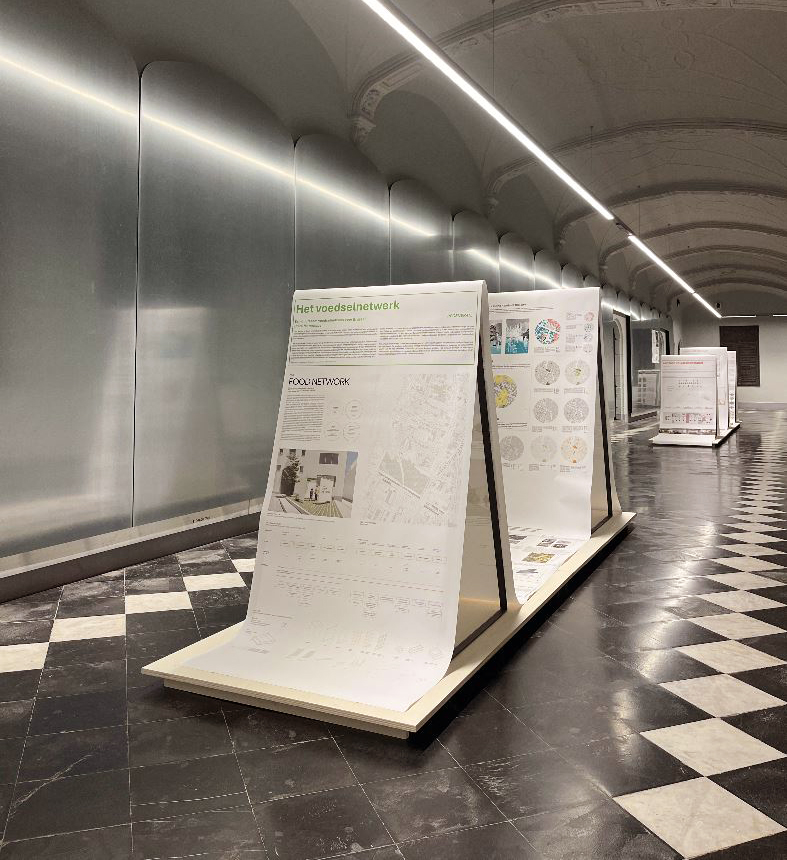
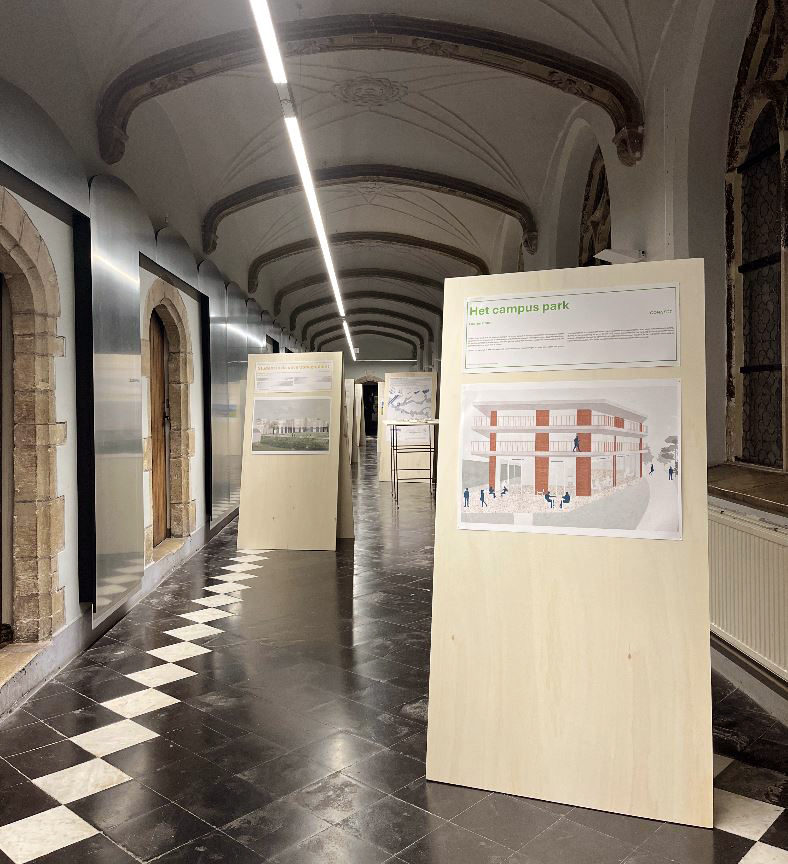
110 students and 17 teachers explored over the last two years the relationship between the city and the university. These theoretical and practical exercises were framed as research electives and design studio courses of our master programmes in architecture and in urbanism and planning. Through design research, students asked questions, raised ideas and tested them with design proposals. The abundant outcomes of these courses were displayed, discussed and curated in an exhibition in 2025 and in this catalogue.
The outcomes consisted of analytical and propositional drawings, pictures, videos, and physical models. Important to mention is that not only teachers and
external reviewers, but also and mainly students actively participated both in making a selection of representative works and in designing the exhibition
formats.
The wide spectrum of projects and the topics they tackled were organised within six themes: Accommodate, Adapt, Integrate, Regenerate, Share and Connect. ‘Accommodate’ refers to student housing and additional student facilities, ‘Adapt’ to the reuse of built heritage, ‘Integrate’ to the introduction of collective functions and spaces for diversity, ‘Regenerate’ to environmental issues such as biodiversity and water management, ‘Share’ to the shared use of spaces and buildings with residents and other institutions, and ‘Connect’ to mobility and accessibility related issues. These themes reflect ambitions to approach the urgent urban challenges that cities currently face.
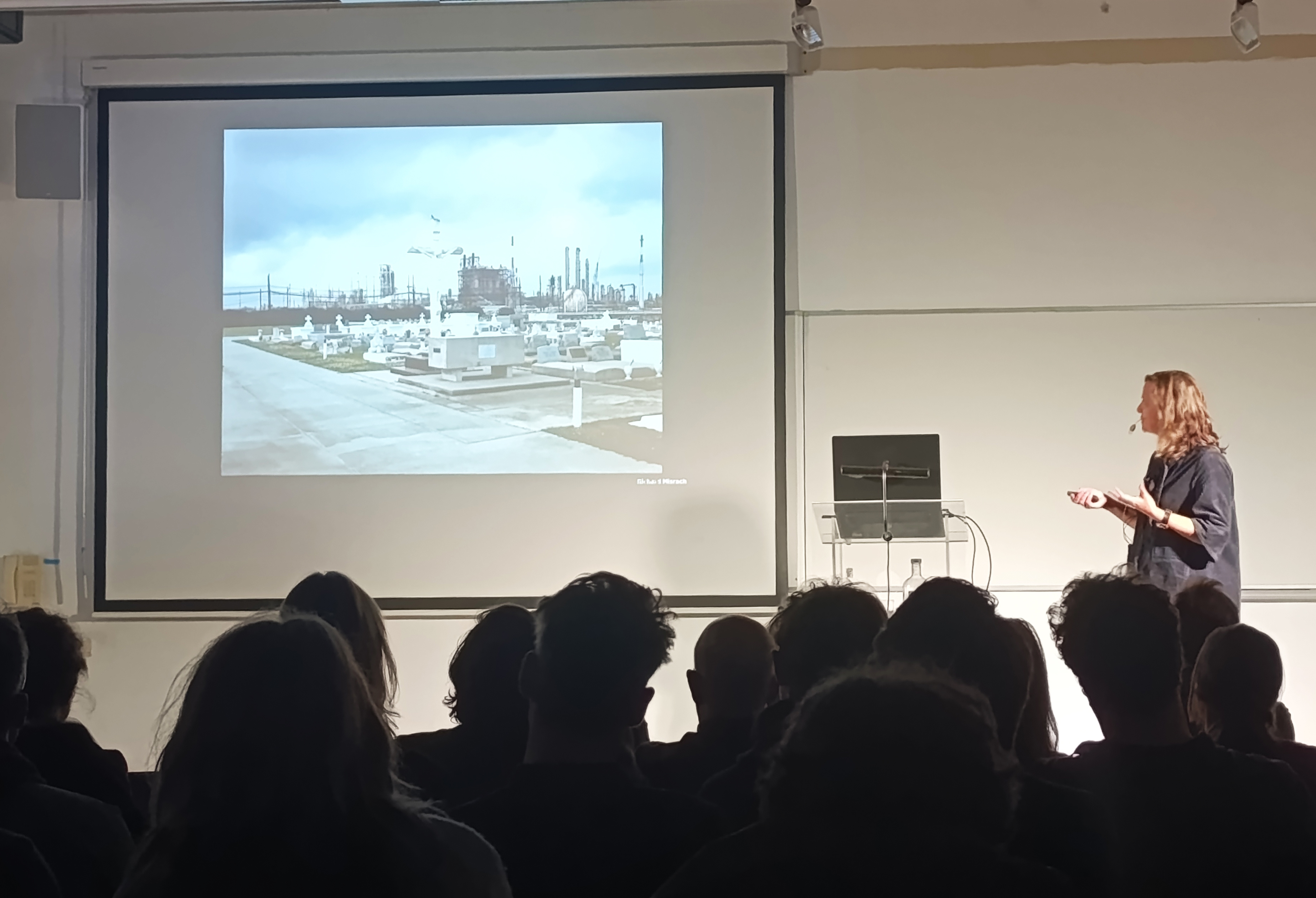
Simultaneously, six guest contributors to reflect on these themes. These guest academics and practitioners are not linked to the faculty, but are far or close related. Their personal reflections complement the student work with an alternative line of thought. The results of this large collective endeavour are bundled in this rather modest exhibition and catalogue. Through them, we hope that our visitors can explore, discover, challenge and reformulate the relation between university and city.
The main concept of the exhibition aligns with the ‘600 hectare KU Leuven’ theme by reflecting on our campuses and seeking to establish stronger dialogues with the city or other surroundings. It aims to reactivate sites, by using some of its currently underused spaces. By doing so, spaces are rediscovered for students and external visitors. The potential spaces to be used in Campus Sint-Lucas Gent in Hoogstraat, for instance, are the cloister (together with some of the adjacent rooms), the church, the courtyard, the back garden… The use of different adjacent spaces will stimulate urban trajectories throughout the university campus and building.
At the same time, the exhibition invites the Faculty of Architecture to create, together with the students and neighbours, several small and simple installations as reflections on how to practically address some of the ongoing urban challenges. These will invite outsiders to visit and occupy the campus. Some possibilities could be a small playground, a reading corner, a small water infiltration area and space for biodiversity enhancement, a shared bicycle parking…


© images by Ophélie Mahieu & Laurien Roelens